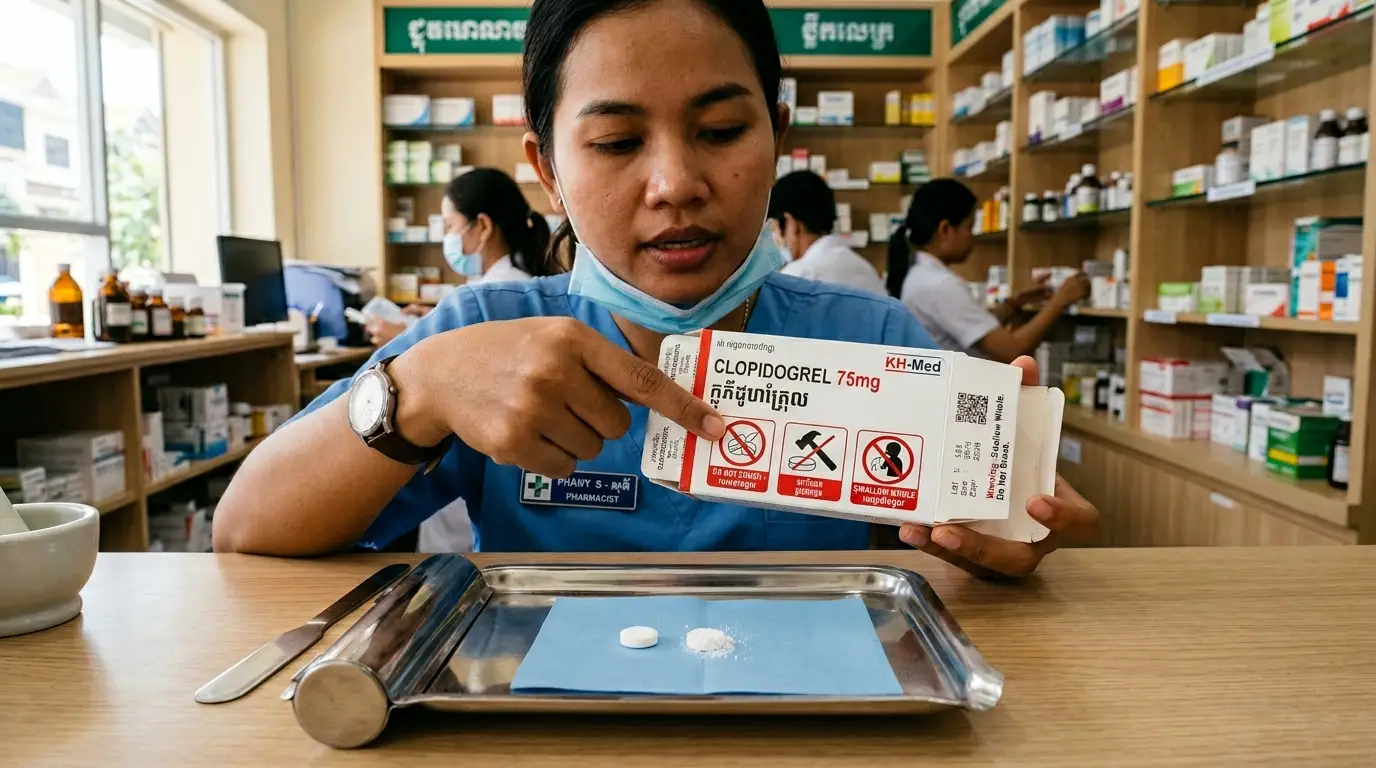
The Hidden Danger of Skipping a Dose — And What to Do If You Miss One
Missing a single dose of your medication might seem harmless — but for many medicines, it can quietly undo your treatment, trigger withdrawal, or even put your life at risk. Here's what every patient in Cambodia needs to know, and what to do when it happens.

Most patients have done it. You get busy, forget your phone, or simply fall asleep before your evening tablet. You wake up the next morning and wonder: Should I take it now? Take two? Just skip it entirely?
It seems like a small thing. But depending on what you are taking, missing a dose is not always a minor inconvenience — it can be a genuine medical event with consequences that unfold over days or even weeks.
Why Your Body Depends on Consistency
Every medicine you take is prescribed with a schedule because your body needs a stable concentration of that drug in your bloodstream to maintain its effect. Think of it like water in a reservoir. Your pharmacist and doctor fill it to a specific level. Miss a dose, and the level drops. For some medicines, that drop is barely noticeable. For others, it can be the difference between controlled and uncontrolled.
This concept is called steady-state concentration — the point at which the amount of drug entering your body equals the amount being eliminated. Disrupting this balance affects how well your treatment works.
Stay updated on health & medicines in Cambodia
Join our community for health tips, medicine guides and more.
The Medicines Where Missing a Dose Is Most Dangerous
Not all drugs carry equal risk when a dose is skipped. Here are the categories where consistency matters most:
1. Antiepileptic Drugs (Seizure Medications)
Missing even a single dose of medications like phenobarbital or valproate can lower your seizure threshold within hours. For someone whose epilepsy has been well-controlled, this can trigger a sudden breakthrough seizure — with no warning.
2. Antihypertensives (Blood Pressure Medications)
When you stop taking amlodipine, losartan, or similar drugs abruptly — even for one day — your blood pressure can rebound sharply. This rebound hypertension is a recognised cause of stroke and heart attack.
3. Antiretrovirals (HIV Treatment)
HIV medications must be taken at consistent times every day. Gaps in adherence allow the virus to replicate, increasing the risk of treatment resistance — a situation where your current regimen stops working and must be changed.
4. Antibiotics
Skipping doses of a prescribed antibiotic course, or stopping once you feel better, is one of the leading contributors to antibiotic resistance. It also means your infection may not be fully cleared, and it can return stronger.
5. Antidepressants and Psychiatric Medications
Missing doses of SSRIs or SNRIs can cause antidepressant discontinuation syndrome — characterised by dizziness, electric-shock sensations, irritability, and emotional instability — even after just one or two missed doses.
6. Thyroid Medications (Levothyroxine)
Thyroid hormone levels are slow to stabilise and slow to recover. Consistent daily dosing is critical; irregular intake produces unpredictable thyroid function that is difficult to correct.
7. Anticoagulants (Blood Thinners)
For patients on warfarin or newer anticoagulants, missing doses can increase the risk of stroke or dangerous clotting events.
What to Do When You Miss a Dose
The guidance depends on the specific medication and how much time has passed. Always read your medicine's patient information leaflet (PIL) first, and when in doubt, call your pharmacist. As a general framework:
If you remember within a short time (1–2 hours):
Take the missed dose as soon as you remember. Then continue your regular schedule.
If it is closer to your next scheduled dose:
Skip the missed dose entirely. Do not double up. Taking two doses at once is almost always more dangerous than missing one.
If you have missed multiple doses:
Do not attempt to catch up on your own. Contact your pharmacist or doctor. For certain medicines — particularly blood pressure drugs, psychiatric medications, and antiretrovirals — the safe approach to resuming treatment is different from simply restarting.
Never:
Take double doses to compensate unless your doctor has specifically instructed you to do so.
Why Missed Doses Happen — And How to Prevent Them
In Cambodia, the most common reasons patients report for missed doses include:
- Forgetting due to a busy schedule or irregular routines
- Running out of medicine and not being able to reach a pharmacy in time
- Side effects that make patients reluctant to continue
- Cost barriers that lead to rationing doses
Lack of understanding of why continuous use is necessary
Practical strategies that work:
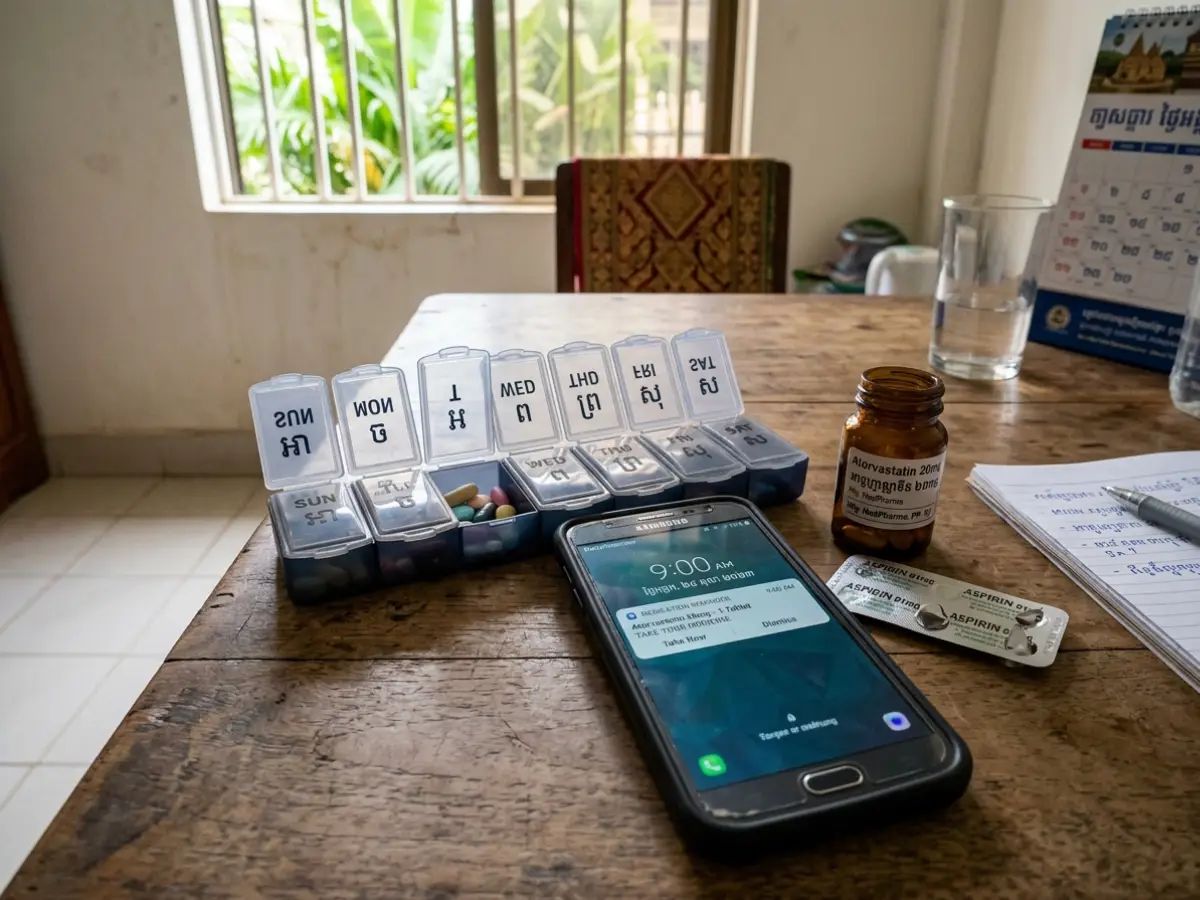
- Set a daily alarm on your phone at the same time every day
- Pair your medicine with a daily habit — such as your morning coffee or brushing your teeth at night
- Use a pill organiser so you can see at a glance whether you have taken your dose
- Keep a small backup supply so you are never caught without medication during busy periods
- Order refills early — before you reach your last few tablets, not after you run out
OSOTCAM allows you to order MoH-verified medicines from partner pharmacies and have them delivered directly to you in Phnom Penh — making it easier to stay stocked and consistent, particularly for long-term medications.
A Note on Self-Discontinuation
I want to address something I see regularly in clinical practice. Many patients in Phnom Penh stop their medications — particularly for hypertension, diabetes, or mental health conditions — once they start feeling better. The logic makes intuitive sense: if I feel fine, do I still need it?
For most chronic conditions, feeling fine is the medication working. Stopping because you feel well is one of the most common reasons patients experience preventable complications.
If you feel your current medication is causing side effects, or you genuinely feel you no longer need it, that conversation should happen with your doctor — not as a unilateral decision made at home.
When to Seek Immediate Medical Attention
Go to a clinic or emergency department if you miss a dose and experience:
- Chest pain, palpitations, or shortness of breath
- A seizure
- Sudden severe headache or vision changes
- Signs of a stroke (facial drooping, arm weakness, speech difficulty)
- Significant mood changes or suicidal thoughts (if on psychiatric medication)
Do not wait to see if these symptoms resolve on their own.
Frequently Asked Questions
Key Takeaway
Missing a dose of medication is something that happens to almost every patient at some point. What matters is what you do next. For most medicines, the right answer is to take the missed dose as soon as you remember — unless your next dose is approaching, in which case you skip it and carry on. Never double up. Never self-discontinue. And for high-stakes medications — antiepileptics, antiretrovirals, blood pressure drugs, anticoagulants, and psychiatric medicines — take missed doses seriously and seek pharmacist guidance when you are unsure.
This article is for general education purposes only and does not constitute medical advice. Always consult a qualified healthcare professional or pharmacist before making any health decisions.
Related articles

Why Taking Your Full Course of Antibiotics Could Save Your Life — Even When You Feel Better After 3

Before Meals or After? The Right Way to Take the Most Common Medicines in Cambodia