Managing Dengue Fever at Home — Why Ibuprofen Is the One Medicine You Must Avoid
Dengue fever is common in Cambodia — but one very common painkiller can make it life-threatening. Find out why ibuprofen must never be used for dengue, what medicines are actually safe, and when home care is no longer enough.
What Is Dengue Fever?
Dengue fever is a mosquito-borne viral infection caused by the dengue virus (DENV), spread primarily by the Aedes aegypti mosquito. In Cambodia, dengue is not a rare disease — it is part of daily life, especially during the rainy season from May to October when mosquito populations surge across Phnom Penh and provinces alike.
Most dengue cases cause flu-like symptoms that last 4–7 days and resolve with proper rest and hydration at home. However, a minority of cases — particularly in children, the elderly, and people with underlying health conditions — can progress to severe dengue, a potentially fatal condition involving internal bleeding and organ failure.
Understanding how to manage dengue at home — and knowing which medicines are safe versus dangerous — can make the difference between recovery and a medical emergency.
Common Symptoms of Dengue Fever
Dengue typically begins suddenly, 4–10 days after being bitten by an infected mosquito. Recognising the classic presentation early allows families to begin appropriate home care immediately.
- Sudden high fever (38.5–40°C), often appearing abruptly
- Severe headache, especially behind the eyes
- Muscle and joint pain (dengue is sometimes called "breakbone fever")
- Skin rash appearing 2–5 days after fever onset
- Nausea, vomiting, and loss of appetite
- Mild bleeding: nosebleeds, bleeding gums, or easy bruising
Fatigue and general weakness
Important: Dengue Warning Signs Requiring Immediate Hospital Care
If the patient develops any of the following, go to the hospital immediately — do not wait:
- Severe abdominal pain or persistent vomiting
- Bleeding from the nose, gums, or in vomit / stool
- Rapid breathing or difficulty breathing
- Fatigue, restlessness, or confusion
- Pale, cold, or clammy skin
No urination for 6+ hours
Why Ibuprofen Is Dangerous in Dengue — The Science Explained
This is the single most important piece of information in this article: if you or a family member has dengue fever, ibuprofen must never be used. This includes all brand names sold under ibuprofen, such as Brufen, Advil, and Nurofen.
1. Ibuprofen Increases the Risk of Bleeding
Dengue virus attacks platelets — the blood cells responsible for clotting. During a dengue infection, platelet counts fall significantly, which already puts the patient at risk of bleeding. Ibuprofen is a non-steroidal anti-inflammatory drug (NSAID). One of its known effects is that it inhibits platelet aggregation, meaning it further reduces the blood's ability to clot. Combining dengue-related thrombocytopenia (low platelets) with the anti-clotting effect of ibuprofen dramatically increases the risk of spontaneous bleeding — internally or externally.
2. Ibuprofen Can Cause Stomach and Intestinal Bleeding
Even in healthy individuals, ibuprofen is known to irritate the stomach lining and can cause gastric ulcers with prolonged use. In a dengue patient whose gastrointestinal tract may already be stressed and whose platelet count is low, the risk of gastrointestinal bleeding becomes substantially higher.
3. Ibuprofen Can Worsen Liver Function
Dengue virus can affect the liver, causing elevated liver enzymes in many patients. Since ibuprofen is also processed by the liver, taking it during dengue may place additional stress on an already compromised organ, potentially worsening liver inflammation.
Never take ibuprofen, aspirin, naproxen, diclofenac, or any other NSAID painkiller when you have dengue fever or suspect you might have it. This applies to adults and children alike.
What Medicine IS Safe for Dengue Fever?
The only pain reliever and fever reducer that is safe for dengue patients is paracetamol (also called acetaminophen). Unlike ibuprofen, paracetamol does not interfere with platelet function and does not irritate the stomach lining in standard doses.
Safe Paracetamol Dosage Guidelines
| Patient | Single Dose | Frequency | Max / Day |
| Adults (>50 kg) | 500 mg – 1,000 mg | Every 4–6 hours | 4,000 mg |
| Children (10–50 kg) | 10–15 mg per kg | Every 4–6 hours | 60 mg/kg |
| Children (<10 kg) | As directed by doctor | Consult doctor | Consult doctor |
Important: Do not exceed the recommended dose of paracetamol. Overdose can cause serious liver damage. If the patient is already taking other medications, check with a pharmacist to avoid double-dosing.
Stay updated on health & medicines in Cambodia
Join our community for health tips, medicine guides and more.

Full Home Care Guide for Dengue Fever
1. Hydration Is Your Priority
Dehydration is one of the most common complications in dengue patients cared for at home. High fever, sweating, vomiting, and reduced appetite all contribute to fluid loss. Ensure the patient drinks at least 2–3 litres of fluids per day.
- Water (filtered or boiled)
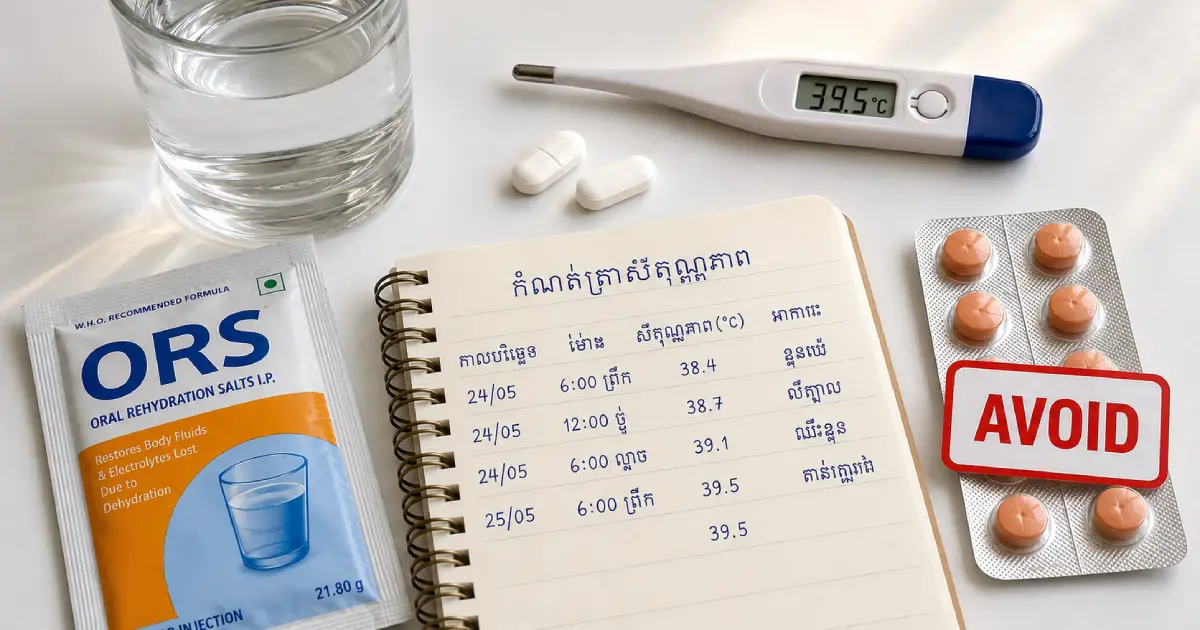
- Oral Rehydration Solution (ORS) — available at all pharmacies
- Coconut water — naturally rich in electrolytes
- Clear soups or broth
- Avoid sugary drinks, energy drinks, and alcohol
2. Rest and Sleep
The body needs energy to fight the virus. Complete rest is essential. Patients should stay in bed, avoid physical exertion, and sleep as much as possible. Screen time and mental stress should also be minimised.
3. Fever Management
Use paracetamol only — as per the dosage guidelines above. You may also use a cool damp cloth on the forehead and neck to provide comfort. Lukewarm (not cold) sponging of the body can help bring down temperature gently.
4. Monitor Symptoms Daily
Keep a simple daily log of the patient's temperature (every 4–6 hours), fluid intake, urine output, and any new symptoms. This information is invaluable when consulting a doctor, as dengue can change rapidly — especially on days 3–6 of illness, when the fever may drop but the patient can actually worsen.
5. Protect Others from Mosquito Bites
A dengue patient is a source of the virus. If a mosquito bites them and then bites someone else, that person can be infected. Keep the patient under a mosquito net during rest, use mosquito repellents, and eliminate any standing water near the home.
Frequently Asked Questions
Key Takeaways
Essential Points to Remember 🚫 Never take ibuprofen, aspirin, or any NSAID when you have or suspect dengue fever — even one dose. ✅ Paracetamol is the only safe fever and pain medicine for dengue patients — follow correct dosage by weight. 💧 Hydration is the cornerstone of dengue home care — aim for 2–3 litres of fluid per day. 📋 Log temperature, fluid intake, and symptoms every 4–6 hours — especially on days 3–6. 🏥 Know the warning signs: bleeding, severe abdominal pain, breathing difficulty, or confusion require immediate hospital care. 🦟 Protect others: keep the patient under a mosquito net to prevent spreading dengue to the household. 💊 Antibiotics do not work against dengue — avoid unnecessary medicines without a doctor's advice. |
This article is for general education purposes only and does not constitute medical advice. Always consult a qualified healthcare professional or pharmacist before making any health decisions.
Related articles
The Hidden Danger of Skipping a Dose — And What to Do If You Miss One

Why Taking Your Full Course of Antibiotics Could Save Your Life — Even When You Feel Better After 3